Enterprise hardware is becoming more expensive, and this time, the pressure is bigger than a normal market swing.
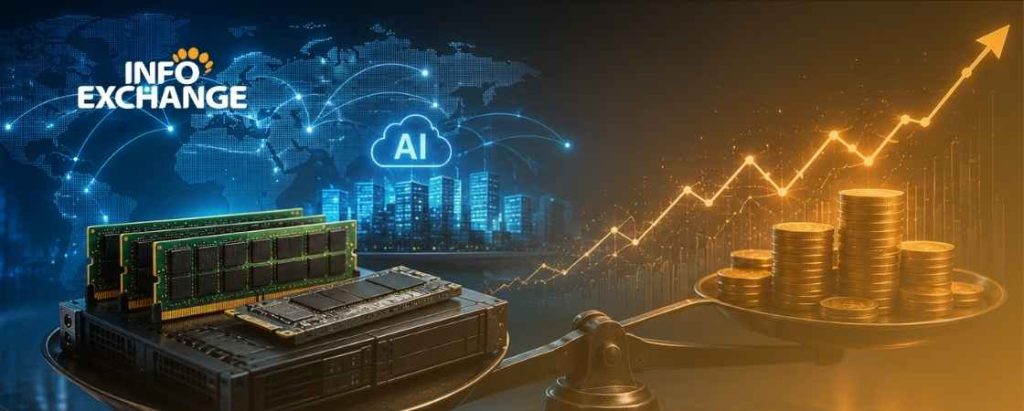
Businesses planning server refreshes, storage upgrades, or infrastructure expansion are now entering a market shaped by one major force: the global race to build AI data centers. These AI environments need huge volumes of memory, high-performance storage, GPUs, and supporting server infrastructure. That demand is now competing with the same supply chain that traditional businesses depend on for RAM, SSDs, and enterprise servers.
IDC reported that the global semiconductor market is facing an unprecedented memory chip shortage, with AI data center demand outpacing supply and the impact expected to continue well into 2027. (IDC)
Why This Matters for Your IT Budget
For Years, buying server hardware followed a daily predictable pattern. Prices moved a little, shipping delays happened occasionally, but overall, businesses could plan upgrades without too much uncertainty. That environment is changing fast.
A server refresh that looked affordable six months ago may now cost up to four times more with lead times up to five months. A storage upgrade that seemed simple may face longer lead times. A RAM-heavy system needed for virtualization, databases, analytics, backup, or business-critical applications may require a larger budget than expected.
Gartner estimates that combined DRAM and SSD prices could rise by 130% by the end of 2026, increasing pressure across PCs, smartphones, and business technology purchases. (Gartner) Network World, citing Counterpoint Research, also reported that DDR5 server memory costs could surge as manufacturers shift capacity toward AI-related demand. (Network World)
What Is Driving the Price Shock?
The issue comes down to supply and priority. Companies around the world are competing for the same hardware components needed to build massive Artificial Intelligence data centers. The same memory, storage, and server technology used by AI companies are also used in the infrastructure that powers your business applications, virtualization platforms, backups, databases, and day-to-day operations.
Memory and storage manufacturers are focusing more capacity on high-demand AI infrastructure because that is where the market is moving fastest. As hyperscalers and cloud providers build larger AI environments, they are buying massive amounts of memory and enterprise SSDs.
That leaves businesses with less pricing power, fewer options, and more uncertainty when planning infrastructure upgrades. For businesses in Jamaica and across the Caribbean, the challenge can be even greater because most enterprise hardware must already be imported through overseas suppliers and distributors. When global shortages increase, smaller markets often feel the pressure faster through higher landed costs and longer procurement timelines. This is not simply another temporary price fluctuation.
TrendForce reported that demand for high-performance SSDs has grown sharply as generative AI moves into large-scale adoption. The firm also expects a clear enterprise SSD shortage in 2026, with meaningful capacity expansion unlikely until late 2027 or 2028. (TrendForce)
The Bottom Line
AI is creating exciting possibilities, but it is also changing the economics of enterprise infrastructure.
For businesses, server hardware planning now needs to be treated as a strategic conversation, not a last-minute purchase. The companies that act early will be better positioned to control costs, reduce risk, and keep their systems ready for what comes next.
Planning a server refresh, storage upgrade, or infrastructure review? Info Exchange can help you assess your environment and make smarter decisions before market pressure limits your options.